Call ✆ +91 9809802016 | 9891320678

Packsound acoustic wood panels & wood wool acoustic panels with NRC 0.9, Class A fire rating & 40 shades. Manufacturer & supplier in India. Get a free quote today.
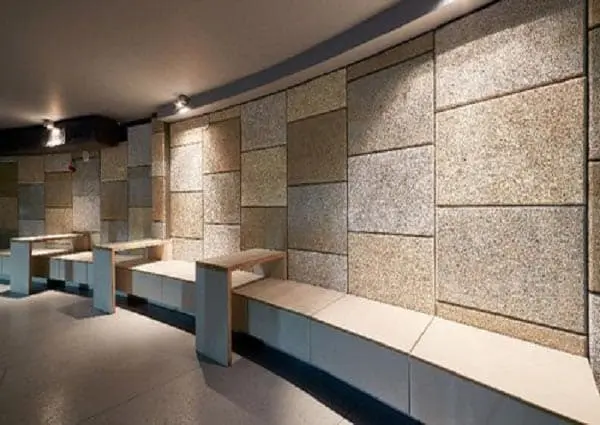
When architects and interior designers in India specify acoustic treatment for auditoriums, offices, schools, hotels, or recording studios, acoustic wood panels — and specifically wood wool acoustic panels — are among the most trusted and widely specified solutions available. They combine genuine broadband sound absorption with a natural, textured aesthetic that no synthetic alternative can replicate.
Packsound by Ecotone Acoustics Limited manufactures and supplies a complete range of wood wool acoustic panels and wood fiber acoustic panels in India. Our panels deliver an NRC value of 0.9, carry a Class A / Class 1 fire rating, are available in 40 acoustical shades, and are moisture-resistant — making them one of the most versatile acoustic panel solutions on the Indian market today.When sound waves interact with wood wool acoustic panels, the porous structure of the panels absorbs the sound energy. The irregularity of the wood fibers and the open-cell structure of the panels contribute to effective sound absorption across a wide range of frequencies. As sound waves penetrate the panels, the energy is converted into heat through friction, reducing the intensity of the sound and minimizing echo and reverberation.
Packsound wood fiber acoustic panels are without fabric laminated wood fiber acoustic tiles and sound absorbing acoustic wall panels are abuse-resistant and are able to withstand repeated impact, yet are lightweight. Wood fiber acoustic panels are easy to install in new construction and in existing buildings for effective sound control.
Features :-
Acoustic wood panels (also called wood wool acoustic panels, wood fiber acoustic panels, or wood wool boards) are rigid, multifunctional panels manufactured from fine wood fibres — typically sourced from softwood species such as spruce or pine — combined with a mineral binding agent such as cement or magnesite, then compressed under controlled conditions into dense, dimensionally stable boards.
The resulting product has a distinctively textured surface with visible wood fibres that gives the panels their characteristic natural appearance. Unlike smooth gypsum or painted plasterboard, the open, fibrous surface of acoustic wood panels actively engages incoming sound waves — breaking them up, slowing their energy, and converting that energy into negligible amounts of heat through internal friction.
This makes wood wool acoustic panels genuinely functional acoustic products — not decorative panels with a token acoustic benefit. When correctly specified and installed, they deliver measurable, tested sound absorption performance across a broad frequency range, backed by internationally recognized standards.
These terms are often used interchangeably in the Indian market, but there is a subtle distinction:
Wood wool refers to long, fine strands of wood (resembling coarse wool or excelsior), which are mineralised and bonded together. The longer fibres create a coarser surface texture with high open-cell porosity — excellent for broadband absorption, particularly at mid and high frequencies.
Wood fiber panels are manufactured from finer wood particles processed into a denser, more uniform board — sometimes with a fabric facing for additional aesthetic flexibility and enhanced absorption at specific frequencies.
Packsound’s PACKSOUND WFF range covers both configurations, giving architects, acoustic consultants, and project managers the right product for every application.
Understanding the acoustic mechanism behind wood wool panels helps explain why they outperform many alternative acoustic treatments in real-world spaces.
When sound is produced in a room — by a speaker, a voice, traffic, machinery, or music — the sound waves travel outward from the source and reflect off hard surfaces (walls, ceilings, glass, floors). Each reflection adds energy to the room, causing echo, reverberation, and noise buildup. In a space with poor acoustics, speech becomes difficult to understand, music loses clarity, and occupants experience fatigue from the constant acoustic stimulation.
Wood wool acoustic panels interrupt this cycle through three mechanisms:
1. Sound Absorption through Porous Structure: The open, fibrous network of wood wool provides millions of tiny pathways for sound waves to enter the panel. As the sound wave travels through these channels, the air particles vibrate against the fibres, generating friction. This friction converts the kinetic energy of the sound wave into a tiny amount of heat — permanently removing it from the acoustic environment. This is why wood wool panels are classified as sound-absorbing panels, not merely sound-blocking ones.
2. Diffusion through Surface Irregularity: The irregular surface texture of exposed wood fibres causes incoming sound waves to scatter in multiple directions rather than reflecting in a single coherent path. This diffusion reduces flutter echo and makes the acoustic environment feel more natural and comfortable — a quality highly valued in music rehearsal rooms, boardrooms, and auditoriums.
3. Broadband Performance: Thanks to the combination of fibre porosity and backing (typically rock wool), Packsound’s wood wool acoustic panels deliver effective sound absorption across a wide frequency range — from the mid-low frequencies (250 Hz) through the critical speech frequencies (500–2000 Hz) to the higher frequencies (4000 Hz). This broadband performance makes them suitable for a wide range of acoustic applications without needing to combine multiple panel types.
Packsound’s WFF Wood Wool Acoustic Panel is a 20 mm thick panel with an acoustically transparent fabric facing on the front side, installed with a 50 mm backing of 48 kg/m³ density rock wool. This composite assembly consistently achieves an NRC of 0.9 — one of the highest performance ratings available for a standard wall panel system.
| Parameter | Specification |
|---|---|
| Panel Sizes | 600 × 1200 mm, 595 × 595 mm |
| Thickness | 20 mm |
| Edge Profile | Normal / H-Groove |
| Density | 400–450 kg/m³ |
| Mass Per Unit Area | 7 kg/m² |
| NRC Value | 0.9 (overall) |
| Fire Rating | ASTM D-876 (Self-Extinguishing) / Class A |
| Thermal Insulation | 45 W/m²/K |
| Bending Strength | 0.9 N/mm² |
| Compressive Strength | 0.20 N/mm² |
| Moisture Resistance | No deterioration at 60°C, 90% RH for 15 days |
| Available Shades | 40 acoustical shades |
| Test Standards | ISO 354-1985, ASTM C423-90a, EN 13168:2001, IS 3308, IS 3346-1980 |
| Frequency (Hz) | 125 | 250 | 500 | 1000 | 2000 | 4000 |
|---|---|---|---|---|---|---|
| Absorption Coefficient | 0.43 | 0.78 | 0.95 | 0.99 | 0.78 | 0.69 |
The data above confirms the panel’s strong performance across the critical speech frequencies (500–2000 Hz), making it particularly well-suited to spaces where speech intelligibility is paramount — conference rooms, classrooms, courtrooms, and call centres.
Our wood wool acoustic panels achieve an NRC (Noise Reduction Coefficient) of 0.9, meaning they absorb 90% of the sound energy that strikes their surface. This places them among the highest-performing standard wall acoustic panels available in India — comparable to or exceeding many fabric-wrapped fiberglass alternatives at a fraction of the aesthetic compromise.
All Packsound WFF panels carry a Class A fire rating (ASTM D-876, Self-Extinguishing). The mineralisation of the wood fibres with cement or magnesite significantly increases fire resistance — the panels do not ignite easily and self-extinguish when the flame source is removed. This makes them compliant with fire safety requirements in public buildings, schools, hospitals, hotels, and commercial spaces across India.
Unlike foam panels or fabric-only systems, Packsound wood wool acoustic panels are impact-resistant and designed to withstand repeated physical contact. With a compressive strength of 0.20 N/mm² and bending strength of 0.9 N/mm², these panels are suitable for high-traffic areas, corridors, gymnasiums, school classrooms, and industrial facilities where conventional acoustic panels would quickly degrade.
The cement-bonded wood fibre composition makes Packsound WFF panels inherently moisture-resistant. Testing confirms no deterioration after 15 days at 60°C with 90% relative humidity — making them a suitable choice for humid environments including sports facilities, covered outdoor areas, and industrial spaces. The high pH of the cement binder also discourages mould growth and rot.
Wood wool acoustic panels are manufactured from natural, renewable wood fibres — sourced from managed forestry — bound with mineral cement. They contain no volatile organic compounds (VOCs), no formaldehyde, no asbestos, and no carcinogenic materials. This makes them a genuinely sustainable acoustic solution that contributes positively to indoor air quality, supporting green building certifications such as LEED and GRIHA.
Acoustic performance and interior aesthetics need not conflict. Packsound WFF panels are available in 40 acoustical shades and can be further painted without any significant degradation of acoustic performance — giving architects and interior designers full creative freedom. The natural wood fibre texture remains visible through paint, maintaining the authentic material character.
Packsound wood wool acoustic panels can be installed directly onto walls or ceilings using adhesive, mechanical fixings (screws into GI or wooden framework), or within suspended ceiling grid systems. Their lightweight nature (7 kg/m²) and standard panel sizes (600 × 1200 mm and 595 × 595 mm) make them compatible with standard grid systems and straightforward to handle on-site without specialist equipment.
Packsound’s PACKSOUND WFF wood wool acoustic panels are designed for use across a wide spectrum of interior environments in India:
Auditoriums require precise acoustic control — sufficient absorption to eliminate harsh reflections and reverberation, without making the space acoustically “dead.” Wood wool panels are widely used on side walls, rear walls, and balcony faces in auditorium design. Their broadband absorption profile and diffusive surface texture make them an ideal complement to other acoustic treatments. For a complete auditorium acoustic solution, explore our auditorium acoustic treatment services.
Classrooms with poor acoustics make it genuinely harder for children to learn, particularly those with hearing difficulties or learning differences. Installing acoustic wood panels on classroom walls significantly reduces reverberation time, improving speech intelligibility and reducing teacher vocal strain. Packsound panels are impact-resistant — designed to survive the demands of school environments.
Open-plan offices and large boardrooms suffer from high ambient noise levels and poor speech privacy. Acoustic wood panels on walls help control reverberation and reduce noise buildup, creating a working environment where conversations are clearer and cognitive fatigue is reduced. Combine with our acoustic hanging baffles or acoustic hanging clouds for comprehensive ceiling treatment.
Professional acoustic environments demand accurate, controlled sound absorption across all frequencies. Wood wool panels — particularly when combined with bass trap solutions at room boundaries — provide the natural broadband absorption that recording engineers rely on. The panels are durable enough for the demanding production environment and aesthetically appropriate for client-facing studio spaces.
Noise is one of the most common complaints in hospitality settings. A restaurant with high reverberation is perceived as louder and less comfortable regardless of actual noise levels. Wood wool acoustic panels installed on feature walls add visual warmth and natural texture while delivering genuine acoustic improvement. Their moisture resistance makes them particularly suited to restaurant environments.
Cinema auditoria require controlled reverberation for optimal dialogue clarity and immersive surround sound. Packsound wood wool panels are widely used in Indian multiplex construction for wall lining behind fabric or directly exposed. For home theatre applications, pair with our acoustic foam panels for a complete acoustic treatment package.
Large-volume sports halls generate significant reverberation from hard floor, wall, and ceiling surfaces. Wood wool panels are one of the few acoustic solutions robust enough to withstand the physical demands of sports facility use — including impact from balls and equipment — while providing meaningful reverberation control. Explore our stadium acoustics solutions for large-scale sports venue applications.
Acoustic comfort is a clinical priority in healthcare environments. Excessive noise increases patient stress, impairs recovery, and contributes to communication errors among clinical staff. Wood wool acoustic panels help reduce ambient noise in waiting areas, consultation rooms, and hospital corridors. Their VOC-free composition and mould-resistant cement-bonded structure make them a hygienic choice for healthcare settings.
In factories, warehouses, and industrial facilities, reverberant noise from machinery creates a challenging work environment and can exceed permissible exposure limits. Wood wool panels mounted on industrial walls and ceilings reduce reverberation time and contribute to a safer, more productive working environment.
One of the questions most frequently asked by architects and procurement managers is how wood wool acoustic panels compare to alternative acoustic wall treatment options:
Fabric-wrapped acoustic panels offer a clean, contemporary aesthetic with a wide range of fabric options. They are excellent performers in controlled environments. Wood wool panels, however, are more impact-resistant, inherently fire-resistant (not dependent on fabric fire treatment), and offer a more robust, natural aesthetic. For spaces requiring both high durability and acoustic performance — such as schools, sports facilities, and industrial offices — wood wool is the stronger choice.
Acoustic foam panels are lightweight and effective at high frequencies, widely used in recording studios and home theatres. They lack the structural robustness, fire resistance, and aesthetic versatility of wood wool panels. Wood wool is the preferred specification for commercial, public, and institutional buildings; foam is more appropriate for dedicated acoustic rooms and home studio applications.
Fiberglass and mineral fiber acoustic panels offer excellent acoustic performance and are widely used in ceiling tile applications. However, they are fragile, can emit dust particles over time, and offer limited design flexibility. Wood wool panels are significantly more durable, do not shed fibres or particles into the occupied space, and present a richer, more natural surface aesthetic.
Grooved wooden acoustic panels (also called slotted wood panels or wood slat acoustic panels) work through a different mechanism — resonant absorption through the slot geometry — and tend to perform better at lower frequencies and with specific groove configurations. Wood wool panels offer broader frequency coverage without the need for precise panel geometry. The two can be used in combination for rooms requiring both bass absorption and broadband mid-high frequency control.
Packsound WFF panels are designed primarily as acoustic wall panels. They can be installed using the following methods:
Direct Fixing: Panels can be bonded directly to masonry or concrete walls using construction adhesive. This is the fastest installation method for large flat wall areas.
Framework Mounting: Panels are screwed into GI (galvanized iron) or wooden stud frameworks. This method allows an air gap to be created behind the panel — which significantly improves low-frequency absorption. A 50 mm rock wool batt in the air gap (as specified in the PACKSOUND WFF system) elevates overall NRC performance to 0.9.
Suspended Grid Systems: For ceiling applications, panels can be integrated into standard suspended ceiling grid systems, allowing concealed installation of services above the acoustic ceiling plane.
Standard panel sizes are 600 × 1200 mm (ideal for wall applications) and 595 × 595 mm (compatible with standard 600 × 600 grid ceiling systems). Both sizes are available with normal or H-groove edge profiles. Custom sizes and colors are available subject to minimum order quantities — contact our team for project-specific requirements.
Yes. Wood wool acoustic panels can be painted with water-based emulsion paint in any color without significant loss of acoustic performance. The open surface structure remains acoustically active after painting. This means the 40 standard shades we supply are a starting point, not a limitation — any bespoke color can be specified with appropriate paint specification.
Packsound is a direct manufacturer of wood wool acoustic panels in India. This means you deal with us at source — no distributor margins, no intermediary quality risk, and direct technical support from the team that made the product.
Our panels are tested to ISO 354-1985 and ASTM C423-90a for sound absorption, and to EN 13168:2001, IS 3308, and IS 3346-1980 for additional physical performance parameters. Every specification we publish is backed by laboratory test data — not manufacturer estimates.
Packsound panels have been installed across more than 350 projects in India, spanning auditoriums, corporate offices, schools, studios, multiplexes, hotels, and industrial facilities. This depth of project experience means our team understands real-world installation challenges — and designs solutions that work on site, not just in specification documents.
One of the key advantages of working with Ecotone Acoustics is our breadth of acoustic product range. For any space requiring acoustic treatment, we can supply:
This means Packsound can deliver a fully coordinated acoustic interior — walls, ceiling, partitions, and doors — from a single manufacturing partner. For complex projects requiring acoustic design guidance before specification, explore our acoustic design and consultancy services.
NRC stands for Noise Reduction Coefficient — a single-number rating that summarises how much sound a material absorbs across the 250 Hz to 2000 Hz frequency range. An NRC of 0 means the material absorbs no sound (perfect reflection); an NRC of 1.0 means it absorbs all sound. Packsound WFF panels achieve NRC 0.9 — meaning they absorb 90% of incident sound energy. This is an exceptionally high value for a wall panel system.
20 mm is the standard thickness for the PACKSOUND WFF system, particularly effective when installed with a 50 mm rock wool backing. For projects requiring stronger low-frequency absorption, thicker panels (25 mm) can be specified — thicker panels generally improve bass absorption at frequencies below 250 Hz.
Standard wood wool acoustic panels are designed for interior use. While they are moisture-resistant for interior humid environments, they are not rated for continuous outdoor exposure to rain and direct UV. For exterior acoustic wall applications, our noise barrier systems are the correct solution.
The required panel coverage depends on your room’s volume, existing surface materials, and target reverberation time (RT60). As a general guide, treating 20–30% of total wall area with NRC 0.9 panels significantly improves acoustic comfort in most rooms. For precise acoustic calculations, contact our acoustic consultant team for a project-specific recommendation.
Yes. At 20 mm thickness with a density of 400–450 kg/m³, Packsound WFF panels have sufficient structural rigidity to be used in lightweight partition wall assemblies. For complete soundproof partition systems, explore our soundproof fixed partition / drywall solutions.
No. Unlike fiberglass or mineral wool products, cement-bonded wood wool panels do not shed fibres or particles into the occupied space during normal use. The cement binder locks the wood fibres in a stable matrix. Panels are suitable for use in environments with air quality sensitivity, including healthcare and food production facilities.
Yes. The mineralisation of the wood fibres with cement creates a material that is not attractive to termites, fungi, or rodents. Unlike untreated timber products, wood wool panels bonded with Portland cement do not support biological attack — a significant advantage in Indian climatic conditions.
Standard sizes and colors are typically available from stock or with short lead times. For large project quantities or custom colors, lead times vary — contact our sales team at the time of enquiry for current availability and project scheduling.
Whether you are an architect specifying acoustic treatment for a new auditorium, a facility manager addressing a noise problem in an existing office, or a contractor sourcing acoustic panels for a hotel fitout, Packsound has the product, the technical knowledge, and the project experience to support your requirement.
Visit Our Facility: NX One, A-717, Techzone-4, Industrial Area, Greater Noida (West), Distt. Gautam Budh Nagar, U.P. – 201306, India
Email: abhinav@packsound.in | sales@packsound.in Call: +91 9809802016 | +91 9891320678